
Graduate Program
Master of Arts in Theology
“God is the real central theme of my endeavors. I have never tried to create a system of my own, an individual theology (…) The point of departure is first of all the Word. That we believe the Word of God, that we try really to get to know and understand it and then, as I said, to think it together with the great masters of the faith. This gives my theology a somewhat biblical character and also bears the stamp of the Fathers, especially Augustine.”– Joseph Ratzinger, Salt of the Earth the Church at the End of the Millennium
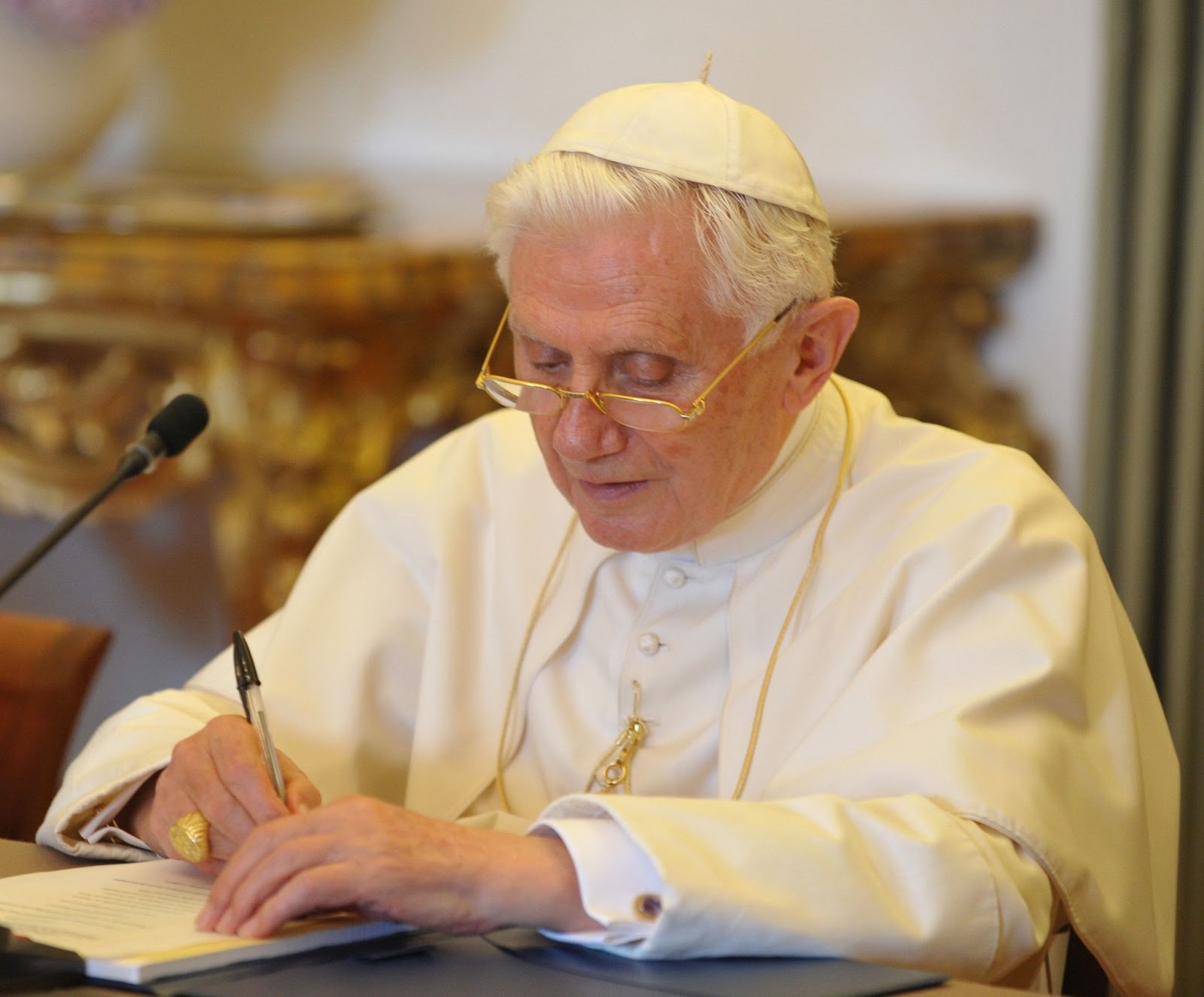
The program is open to those who possess a bachelor’s degree or its equivalent in philosophy, theology, or related studies.
The program prepares students for doctoral studies in theology, specifically, Dogmatic Theology.
Participation in the program requires attendance of all the courses of a five-semester duration and a thesis directed by one of the program’s professors.
Rationale
Theology is discourse about God and about all things as related to God, based on God’s self-revelation. Revelation is the Word of God, transmitted in Scripture and Tradition to and through the Church as the community of believers.
The courses offered in this program of study are aimed at introducing the student to theology thus understood. St. Anselm has famously described the attitude most productive for this pursuit, namely, “Faith seeking understanding” (fides quaerens intellectum).
Theology mediates between faith and the ever-changing cultures within which the human person exists and functions. It shines the light of faith upon the different questions and challenges which confront the human person, while paying attention to the deepest yearnings and longings of the human spirit and are most fundamental orientation toward God.
Course Goals
To familiarize students with the person and theology of Joseph Ratzinger/Benedict XVI.
To expose students to the theological contours and figures that marked the ecclesial landscape of the Second Vatican Council, especially highlighting Ratzinger’s contributions.
To engage the question of theological hermeneutics from the Ratzingerian point of view.
To acquaint students with the magisterial works by Benedict XVI regarding the Church in Africa.
A scientific engagement of Ratzinger to the Theology of Culture.
A study of the symbols of the religious expressions in Africa, from the perspective of a natural theology of revelation.
Learning Outcomes
A clear understanding of Ratzinger as a major player in the drama of twentieth and twenty-first century Christianity.
An increased facility with thinking through the theological positions of the Second Vatican Council.
A more exact understanding of the influence of Ratzinger’s thought on contemporary secularization of society.
A deeper appreciation of the relationship between faith and reason from the Ratzingerian perspective.
A greater appreciation of the interaction between Christian faith and African cultures and Traditional Religions, from the dialectic of Ratzingerian Inculturation and Inter-culturality.
First Semester - Foundations
The Person of Ratzinger
Ratzinger’s Life’s Story
Ratzinger, Augustine:
The Hermeneutic of Love: Amor Meus, Pondus Meum
The History of the Human Being: De Confessiones
The History of the World: De Civitate Dei
The History of God: De Trinitate
Ratzinger and Aquinas: On Faith and Reason
Joseph Ratzinger: “Man between Reproduction and Creation”, COMMUNIO, International Catholic Review, Washington D.C. (1989).
Ratzinger and German Idealism: Kant, Hegel, Nietzsche, Feuerbach
German Idealism: Principal Features
Kant: Critique of Pure Reason
Kant: Religion Within the Boundaries of Mere Reason
Hegel: Life of Jesus
Hegel: Phenomenology
Nietzsche: The Genealogy of Morals
Nietzsche: The Joyful Wisdom
Nietzsche: The Anti-Christ
Feuerbach: The Essence of Christianity
Ratzinger and Modernity: Pascal, Newman, Lonergan
Pascal: Les Pensées
Newman: An Essay in Aid of a Grammar of Assent and An Essay on the Development of Christian Doctrine
Lonergan: Method in Theology and Understanding and Being
Scientific Research Methodology:
Intellectual Integrity and Plagiarism
Chicago Manual Style of Writing
Citations and References: Books
Citations and References: Journals and Articles
Online Research
Structure of a Research Paper
Recommended Primary Bibliography:
Kate L. Turabian, A Manual for Writers of Research Papers, Theses, and Dissertations, Chicago Style for Students & Researchers, Eight Edition, Chicago: The University of Chicago Press, 2013.
Lucretia B. Yaghjian, Writing Theology Well, A Rhetoric for Theological and Biblical Writers, New York: Continuum, 2006.
Second Semester
Ratzinger and Theological Method – Donum Veritatis:
The Vocation of the Catholic Theologian
Professor and participant in the Second Vatican Council
Prefect of the Congregation for the Doctrine of the Faith
Magisterium: Teaching and Authority, Vatican II: Hermeneutics of continuity
Recommended Primary Bibliography:
Joseph Ratzinger, The Nature and Mission of Theology: Approaches to Understanding Its Role in the Light of Present Controversy, San Francisco, Ignatius Press, 1995.
_____. Principles of Catholic Theology: Building Stones for a Fundamental Theology, San Francisco: Ignatius Press, 1987.
Congregation for the Doctrine of the Faith: Instruction on the Ecclesial Vocation of the Theologian, Donum Veritatis, 1990.
Ratzinger and the Church – Sacramentum Salutis
The Church as the Sacrament of salvation
The Church as the People of God
The Charisms and Holiness of the Church
The Church and Ecumenism
The Church and the Eucharist
Papal Primacy, Episcopacy and the Priesthood
Recommended Primary Bibliography:
Joseph Ratzinger, Ministers of Your Joy, Scriptural Meditations on Priestly Spirituality, Redeemer Books, 1989.
_____. Credo for Today: What Christians Believe, San Francisco: Ignatius Press, 2009.
_____. Principles of Catholic Theology: Building Stones for a Fundamental Theology, San Francisco: Ignatius Press, 1987.
_____. Called to Communion, Understanding the Church Today, San Francisco: Ignatius Press, 1996.
_____. Pilgrim Fellowship of Faith, The Church as Communion, San Francisco: Ignatius Press, 2005.
_____. Theological Highlights of Vatican II, New York: Paulist Press, 2009.
_____. Church, Ecumenism & Politics, New Endeavors in Ecclesiology, San Francisco: Ignatius Press, 2008.
Benedict XVI, Apostolic Constitution Anglicanorum Ceotibus Providing for Personal Ordinariates for Anglicans Entering Into Full Communion with the Catholic Church, November 4, 2009.
Ratzinger and the Church Fathers – Ressourcement
The People and House of God in St. Augustine’s Doctrine of the Church
The Theology of History in St. Bonaventure
The Hermeneutic of Creative Fidelity
Recommended Primary Bibliography:
Joseph Ratzinger, The Theology of History in St. Bonaventure, Franciscan Herald Press, 1971.
_____. Volk und Haus Gottes in Augustins Lehre von der Kirche, Munich 1954.
_____. The Unity of the Nations, A Vision of the Church Fathers, Washington D.C.: Catholic University of America Press, 2015.
Benedict XVI, Jesus, The Apostles, and the Early Church, San Francisco: Ignatius Press, 2007.
Ratzinger on Faith and Reason – Fides Quaerens Intellectum
Christianity and the Logos
Subiaco, Regensburg, Westminster and Bundestag
1959 Inaugural Lecture: God of Faith, God of the Philosophers
Fides et Ratio: Credo Ut Intellegam; Intellego Ut Credam
Recommended Primary Bibliography:
Joseph Ratzinger, Introduction to Christianity, San Francisco: Ignatius Press, 2004.
_____. Faith and the Future, San Francisco: Ignatius Press, 2009.
_____. Handing on the Faith in an Age of Disbelief, San Francisco: Ignatius Press, 2006.
_____. The Dialectics of Secularization: On Reason and Religion, San Francisco: Ignatius Press, 2006.
Benedict XVI, The Regensburg Lecture, South Bend, IN: St. Augustine’s Press, 2007.
Third Semester
Ratzinger on Law and Politics – Ius Naturale
Natural Law and the Moral Order
Religion and Politics
Justice, the Goal of Politics
Secularization, relativism and politics
Law and conscience
Recommended Primary Bibliography:
Joseph Ratzinger, Faith and Politics, San Francisco: Ignatius Press: 2018.
_____. Church, Ecumenism & Politics, New Endeavors in Ecclesiology, San Francisco: Ignatius Press, 2008.
_____. On Conscience, San Francisco: Ignatius Press, 2007.
_____. Values in a Time of Upheaval, San Francisco, Ignatius Press, 2006.
_____ and Jügen Habermas, The Dialectics of Secularization On Reason and Religion, Ignatius Press, 2006.
_____ and Marcello Pera, Without Roots, The West, Relativism, Christianity and Islam, Basic Books, 2007.
Edited by Marta Cartabia & Andrea Simoncini, Pope Benedict XVI’s Legal Thought, A Dialogue on the Foundation of Law, New York: Cambridge University Press, 2015.
Benedict XVI, Encyclical Letter Caritas in Veritate On Integral Human Development in Christy and Truth, June 29, 2009.
Ratzinger and Christology – Dominus Iesus
The Christological controversies
Jesus Christ, Person and Office
Jesus the Savior: Soteriology
The Christology of the Sermon of the Mount
Recommended Primary Bibliography:
Joseph Ratzinger/Benedict XVI, Jesus of Nazareth, Volumes I-III, New York: Doubleday, 2007; San Francisco: Ignatius Press, 2011; 2012.
_____. Behold the Pierced One, An Approach to a Spiritual Christology, San Francisco: Ignatius Press, 1986.
_____. On the Way to Jesus Christ, San Francisco: Ignatius Press, 2005.
_____. Introduction to Christianity, San Francisco: Ignatius Press, 2004.
_____. Journey to Easter, New York: A Crossroad Book, 1987.
CDF, Declaration Dominus Iesus, 2000.
CDF, Notification on Jon Sobrino, 2006.
Ratzinger and Mariology – Maria Mater Ecclesiae
Mary Church at the source
Mary, Image and Model of the Church
Mary, Daughter Zion
Mary and the Communio Sanctorum
Marian Apparitions
Recommended Primary Bibliography:
Joseph Ratzinger, (with Hans Urs Von Balthasar) Mary, the Church at the Source, San Francisco: Ignatius Press, 2007.
_____. Daughter Zion: Meditations on the Church’s Marian Belief, San Francisco: Ignatius Press, 1983.
_____. Theological Highlights of Vatican II, New York: Paulist Press, 2009.
_____. The Message of Fatima: Theological Commentary, Vatican City: Libreria Editrice Vaticana, 2000.
Benedict XVI Homilies
Ratzinger and Christology – Dominus Iesus
The Sacramental Foundation of Christian existence
Liturgy and Symbolism
Beauty: Theology of sacrifice and Liturgy
Tradition as foundation of Catholic Liturgy
Sacred Music: Encounter with the Divine
African Religious Expressions and Symbolism
The Development of Rites/Rituals
Recommended Primary Bibliography:
Joseph Ratzinger: The Spirit of the Liturgy, San Francisco: Ignatius Press,
_____: The Meaning of Christian Brotherhood, San Francisco: Ignatius Press, 1993.
_____: The Feast of Faith, Approaches to a Theology of the Liturgy, San Francisco: Ignatius Press, 1986.
_____: Heart of the Christian Life, Thoughts on Holy Mass, San Francisco: Ignatius Press, 2010.
_____. A New Song for the Lord, Faith in Christ and Liturgy Today, New York: A Crossroad Book, 1996.
Benedict XVI: Behold the Lamb of God, Kennington, Oxford: Family Publications, 2010.
_____: Post Synodal Apostolic Exhortation Sacramentum Caritatis, 2007.
Fourth Semester
Ratzinger on Law and Politics – Ius Naturale
Interculturality and Inculturation
Christ, faith and the challenges of culture
Jesus Christ, universale concretum et personale
The Sacred in African Culture
Recommended Primary Bibliography:
Joseph Ratzinger, Many Religions – One Covenant, Israel, the Church and the World, San Francisco: Ignatius Press, 1999.
_____. Christianity and the Crisis of Cultures, San Francisco: Ignatius Press, 2006.
_____. Truth and Tolerance: Christian Belief and World Religions, San Francisco: Ignatius Press, 2004.
Ratzinger and Christology – Dominus Iesus
Revelation, Scripture and Tradition
Exegesis and Theology
Patristic and Medieval Exegesis
Modern Exegesis and the Historical-Critical Method
The Relationship between Dogma and Preaching
Recommended Primary Bibliography:
Benedict XVI, Post-Synodal Apostolic Exhortation on the Word of God in the Life of the Church, Verbum Domini, 2010.
Joseph Ratzinger, Dogma and Preaching, Applying Christian Doctrine to Daily Life, San Francisco: Ignatius Press, 2011.
_____. “In the Beginning…” A Catholic Understanding of the Story of Creation and the Fall, Grand Rapids, MI: William Eerdmans, 1995.
_____. God’s Word, Scripture, Tradition, Office, San Francisco, Ignatius Press, 2008.
Ratzinger and Eschatology – Vita Mutatur Non Tollitur
The Four Last Things
The Finitude of History
The Christian understanding of the Body
The Resurrection
Recommended Primary Bibliography:
Joseph Ratzinger, Eschatology: Death and Eternal Life, Washington DC: The Catholic University of America Press, 1988.
_____. Introduction to Christianity, San Francisco: Ignatius Press, 2004.
Benedict XVI, Encyclical Letter On Christian Hope, Spe Salvi, 2007.
Ratzinger and Christian Spirituality: Deus Caritas Est
Theological Anthropology: The Human Being, Created for Love
The Human Search for Meaning
The Human Being, Known and Loved: Encyclical Deus Caritas Est
The Human Being, Called to Hope: Encyclical Spe Salvi
The Essence of Christianity: Faith, Hope and Love
Recommended Primary Bibliography:
Joseph Ratzinger, Behold the Pierced One, An Approach to a Spiritual Christology, San Francisco: Ignatius Press, 1986.
_____.: The Yes of Jesus Christ, Spiritual Exercises in Faith, Hope and Love, New York: Crossroad Publishing Company, 1991.
Edited By: Robert Moynihan, Let God’s Light Shine Forth, the Spiritual Vision of Pope Benedict XVI, New York: Doubleday, 2005.
Fifth Semester
Research Dissertation [Maximum: 120 pages]